

Prof. Johannes Reuter
HTWG Konstanz - University of Applied Sciences, Germany
Speech Title: On Model Predictive Path Integral Control
Abstract: In recent years, Model Predictive Path Integral (MPPI) based control algorithms have been proposed and applied in various fields with great success, e.g. in mobile robot applications and autonomous driving. While well established in the robotics community, up to now, MPPI is hardly known by researchers and practitioners in the controls community. In this talk two different approaches towards MPPI control will be presented and discussed. The first one is based on classical optimal control theory in a stochastic setting, the second one, the so-called information theoretic MPPI is derived without using Bellman’s principle of optimality, and, in general, solves an open loop optimal control problem. The results coincide for some special system classes. Several illustrative examples of real-world applications are used to reflect pros and cons of the methods.
Bio: Dr. Reuter first studied mathematics and physics at Bielefeld University (Germany) before obtaining degrees in electrical engineering from Bielefeld University of Applied Sciences and from Technical University Berlin. There he also earned a Ph.D. with a thesis on data fusion for mobile robot applications. From 2000 to 2004, he worked at IAV GmbH in Berlin and IAV Automotive Engineering Inc. in Ann Arbor, Michigan, in the field of hardware and software development for automotive control units and fuel cell control. From 2004 to 2007, he worked at EATON Corporation's Innovation Center in Southfield, Michigan, in the areas of mechatronic actuators, safety-related, and, in particular, exhaust aftertreatment systems. Since September 2007, he has been a professor of automatic control at the Faculty of Electrical Engineering at HTWG Konstanz where he has established a research group focusing on data fusion and control with applications particularly in the field of maritime systems.

Prof. John (Ioannis) Kechagias, PhD
University of Thessaly, Greece
Speech Title: Optimization of Laser-Finished FFF-Manufactured PA-CNT for Enhanced Kerf Quality and Surface Performance
Abstract: Fused Filament Fabrication enables lightweight, cost-effective polymer composites, but optimizing parameters and post-processing steps are essential to overcome defects and anisotropies. This work reports experimental results on polyamide carbon nanotube nanocomposites (PA-CNT) produced via FFF and subsequently refined to final dimensions using laser cutting. Three processing parameters (air pressure, laser power and cutting speed) were investigated through a central composite design (CCD). Kerf geometry and surface roughness were analysed and optimised using the surface response approach and desirability analysis, demonstrating suitability for high-performance applications.
Bio: John (Ioannis) Kechagias is a Professor at the Department of Forestry, Wood Sciences and Design (FWSD) at the University of Thessaly, where he serves as Director of the Design and Manufacturing Laboratory. He earned his Diploma in Mechanical Engineering from the University of Patras in 1995 and completed his PhD at the same institution in 2001. His research interests include experimental design, quality engineering, and process optimization. He is the Editor-in-Chief of the International Journal of Experimental Design and Process Optimization (IJEDPO) and has been ranked among the World’s Top 2% Most Cited Scientists by Stanford University (2021-2023). He is also recognized as a Highly Ranked Scholar in manufacturing by ScholarGPS (2025).
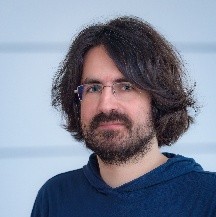
Prof. Vlaho Petrović
University of Oldenburg, Germany
Speech Title: Wind farm control suitable for future energy systems
Abstract: In recent years, the main focus of wind farm control has been on value maximization. On one hand, wind farms need to be contributing to the stability of the power grid in a similar manner as conventional power plants. This includes fast adjustments of the power output, ensuring reliable power reserves and being able to predict the available power. On the other hand, wind farms have to maximize their power production, especially in periods with low wind speeds. Beside finding suitable strategies for coordinated control of wind turbines within the wind farm, this has also lead to an even faster increase in dimensions of new wind turbines compared to their rated power. To make such large rotors technically and economically feasible, advanced control strategies for load reduction are essential. The talk will outline the main challenges in wind farm control and present state-of-the-art algorithms for control of wind farm power output.
Bio: Vlaho Petrović received the M.Sc. and Ph.D. degrees from the Faculty of Electrical Engineering and Computing, University of Zagreb, Croatia, in 2008 and 2013, respectively. Since 2016, he has been working as a Senior Researcher at the University of Oldenburg, Germany, where he leads a team on control of wind turbines and wind farms. His research interests include control and estimation techniques in wind energy, with the focus on optimal and predictive control. Additionally, he has been working on scaled wind turbine models suitable for experimental validation in wind tunnel experiments.