

Prof. Alberto Doria
University of Padova, Italy
Alberto Doria graduated in Mechanical Engineering (5 years) at the University of Padua on February 21st 1984 (110/110 Cum Laude). In 1984–85, Alberto Doria attended the Artillery School of the Italian Army and completed his mandatory military service as an artillery officer. In 1986 he joined the Italian National Research Council as contract researcher a of the RFX project, a large experiment on nuclear fusion. He designed and built the robot for the maintenance of the first wall of the RFX machine. In 1987 Alberto Doria received from Padova University the Specialization in Plasma Engineering and Controlled Thermonuclear Fusion. In 1988 he spent a period at the Sandia National Lab in Albuquerque (USA), to carry out tests on the elements of the RFX machine. In 1990 Alberto Doria became researcher of Machine Mechanics at the University of Padua. He carried out research in the fields of robotics, synthesis of mechanisms, control of vibration and noise and vehicle dynamics.In the academic years 1991-92 and 1992-93 he spent periods at the Technical University of Gdansk as a lecturer in the intensive robotics module (EU Tempus program). From 1995 to 1998 he taught various courses of the Engineering Faculty of Trento. In 2002 Alberto Doria became associate professor of Machine Mechanics at the University of Padua. He carried out research in the fields of bicycle dynamics and identification of vehicle properties, creating specific equipment for the laboratory of Mechanics of vibration. In 2014, as part of the LLP Erasmus program, he was called at the Technishe Universitat Wien (AT), as teacher of the "Advanced topics in vehicle dynamics" course with the qualification of Univ. Lektor. In 2014 he started the construction of the Modal Analysis Laboratory and launched a new line of research on energy harvesting from vibrations with piezoelectric harvesters. Since 2019 Alberto Doria has extended his research on vibrations to the fields of robotics and automatic machines. Alberto Doria has been full professor of Machine Mechanics at the University of Padua since April 2021. He belongs to the Group of Machine Mechanics of the Department of Industrial Engineering, and coordinates the activities of the Mechanical Vibration sector, which take place in the laboratories of Modal Analysis and Vibration Mechanics. The main research topics are vibration control, under-actuated robots, robot vibrations, vibration energy harvesting with piezoelectric devices. Alberto Doria is author of 137 indexed papers. Alberto Doria has been the principal investigator of various research projects funded by public institutions. The most important are:
H2020 “Innovative Polymer-Based Composite Systems for High-Efficient Energy Scavenging and Storage” (InComEss call H2020-NMBP-ST-IND-2019, proposal 862597-2), principal investigator of the research unit of Padua.
FSE 2014 - 2020 - Project 2105-24-11-2018 “Optimization of the infusion process through the innovative combination of vibro-chemical methodologies (OIVC)”.
FSE 2014 - 2020 - Project 2105-22-2216-2016 2105 “Multiphysics methodologies for producing horns for different vehicles (MMPAT)”
FSE 2007/2013 - Project 2105/1/27/1148/2013: “Advanced design methodologies for the reduction of vibrations and noise generated by coffee machines”.
Alberto Doria carries out an important part of his research activity in the industrial field, as PI of research projects of Padua University with industries.
Alberto Doria is member of international scientific organizations and committees (ASME and IFToMM), and helped to organize international congresses (ASME AVT, EVER and BMD). Alberto Doria since 2021 is chair of the Research Committee of the Department of Industrial Engineering.
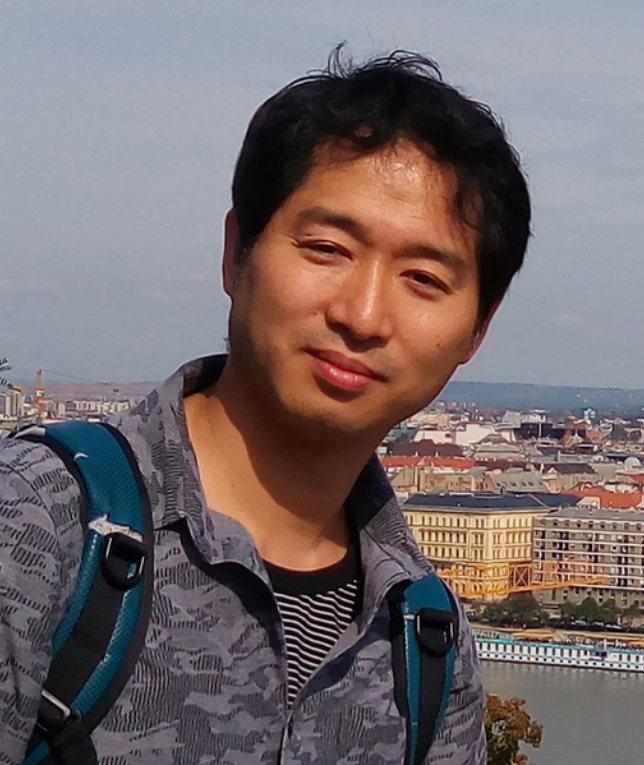
Prof. Kojiro Iizuka
Shibaura Institute of Technology, Japan
Prof. Kojiro Iizuka received his Bachelor’s and Master’s degrees from the Tokyo University of Agriculture and Technology and earned his Doctoral degree from SOKENDAI (The Graduate University for Advanced Studies), Japan. He has held academic positions at Chuo University and Shinshu University and is currently a Professor at Shibaura Institute of Technology. He also served as a Visiting Professor at Lodz University of Technology in Poland through a JSPS grant (2023–2025). His research focuses on terramechanics, lunar exploration rovers, wheel and locomotion systems, agricultural robots, airless tires for rescue robots, and sports engineering.
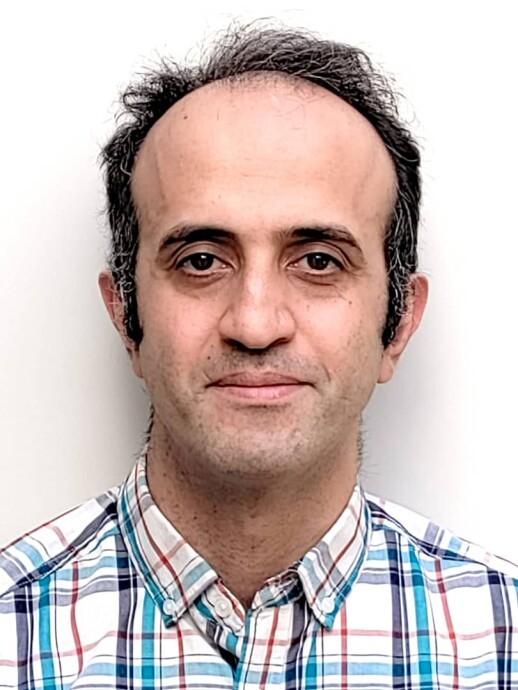
Lect. Hashem Haghbayan
University of Turku, Finland
Dr. Hashem Haghbayan is a University Lecturer and Adjunct Professor (docent), and the Head of the Autonomous Systems Laboratory (ASL) at the Department of Computing, Unit of Robotics and Autonomous Systems (RAS), University of Turku, Finland. He received his Ph.D. with honors in Information and Communication Technologies from the University of Turku in 2018, after which he continued his academic career at UTU as a Postdoctoral Researcher, Senior Research Fellow, and University Lecturer. Dr. Haghbayan’s research focuses on leveraging reinforcement learning, active inference, and deep learning to advance embodied intelligence, enhance robotic self-awareness, optimize resource management, and implement digital twinning in robotics. He has served as a Technical Program Committee member and reviewer for several international conferences and journals. He currently serves as a co-leader of the EU co-funded research project HAIF: Human-Centric Artificial Intelligence for a Sustainable Future, supported by Horizon Europe’s Marie Skłodowska-Curie Actions, and is also Principal Investigator for Finnish national research initiatives. He has been a research visitor at ETH Zürich in 2021 and at Politecnico di Milano in 2022 and 2023. Dr. Haghbayan is currently the Head of the Master’s Degree Program in Robotics and Autonomous Systems at the University of Turku.
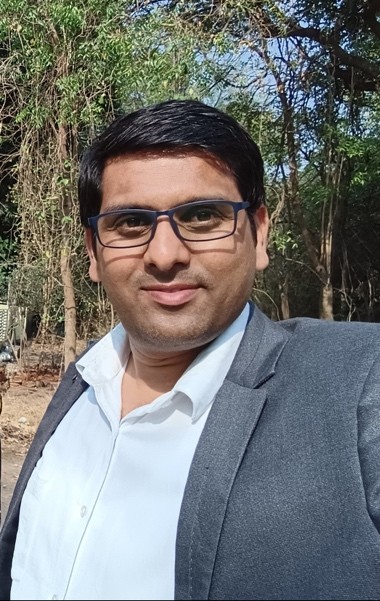
Dr. Rajesh Patil,
Örebro University, Sweden
Dr. Rajesh Patil is an Assistant Professor in the Department of Mechanical Engineering at the School of Science and Technology, Örebro University, Sweden. With more than twelve years of combined academic and industrial experience, he specializes in Digital Manufacturing, Smart Manufacturing, Intelligent Automation Systems, and Automotive Safety. His work focuses on developing advanced, AI-enabled production technologies that support high-performance and sustainable manufacturing. Rajesh earned his Ph.D. in Mechanical Engineering with a concentration on intelligent manufacturing and autonomous technologies. He also holds a Master’s degree in Mechatronics Engineering, which strengthens his interdisciplinary expertise across mechanical systems, automation, and robotics. Throughout his career, he has led several industry-driven research projects and has authored peer-reviewed journal articles, international book chapters, and contributed to multiple patents. His research collaborations span manufacturing, robotics, and digitalization, with a strong emphasis on solving real-world industrial challenges. Beyond research, Rajesh has played a significant role in establishing industry–academia partnerships, coordinating internship and career development programs, and enhancing student engagement with leading global organizations. He actively mentors emerging researchers, participates in international academic collaborations, and serves as a reviewer for reputed scientific journals. His long-term vision is to advance intelligent, connected, and sustainable production systems, contributing to the next generation of manufacturing aligned with Industry 5.0 and global digital transformation.